

I've always collected errors in diction, things people mis-hear, like "windshield factor" and "the next store neighbors." Years ago, one of my students wrote an essay in which she described the world as being harsh and cruel, "a doggy-dog world." I've since come to think she may have been more astute and accurate than those who describe it in the usual way. My Stories - Mobridge Memories -
Tuesday, December 4
Car Troubles & Cell Phones


Monday, December 3
Football II
Yesterday I watched the worst football game I’ve ever seen. Even the word “inept” is too “ept” for what they were doing. How about “in-cubed-ept?” I’m talking about that fiasco between the New York Jets and the Arizona Cardinals. Man, was it awful. Both teams were awful, the jets just a little less so. The Cardinals defense has done all it could to win the first twelve games, and the offense has done everything it could to lose the last eight. Talk about an offense that’s really offensive, and I mean stinky or stenchy. And poor Larry Fitzgerald, one of the best if not the best wide receiver in the game, deserves better. He caught one pass in the first quarter and that was it. All other passes somewhere in his direction either skipped off the ground or were ten yards over his head. He’s beginning to look like a deer in the headlights whenever the camera picks him up coming off the field after another of the many failed third-down conversions. He deserves to be traded to a team with a quarterback that can throw the ball to him. Almost any other team and any other quarterback would be better than what he has here.
More on what to do to improve NFL and college football and to make the game less dangerous. Have you noticed how long it takes for officials to blow the whistle when the play is obviously over? Instead they allow that pack of defenders and offenders to shove each other around like they do in a rugby scrum . . . with the poor ball carrier somewhere in the middle of the mess, with defenders all ripping at his arms to get the ball loose. So, referees, blow the whistle sooner. My other suggestion is to eliminate tackling. Just play it as a two-handed touch football game—no tackles, no slams to the ground, no grabbing, no late hits—just touches.
Sunday, December 2
Football

Fifty years ago, the game was played at half the speed we see in games today. And I’m not talking about just the NFL. High school players are bigger and stronger and faster than they were half a century ago, partly because of weight programs that pump them up but also because every generation is bigger than the last. Nutrition, exercise, genetics, whatever—each generation is bigger and stronger and faster than the last. Many college teams are as good as or better than most of the NFL teams fifty years ago. Quarterbacks are almost all 6-3 or 6-4 and weigh 225 to 245. Offensive lines average 300 or more, defensive lines only slightly less but are faster than lightning. And the hits are much more severe. Remember in the old days? Whatever happened to the “quick kick” on third down, or the old “Statue of Liberty” play, or the quarterback who would leap in the air to throw a pass to be sure to get it over the defensive line, or the triple reverse? All of them required time that in today’s game just isn’t available. And the quarterback who would jump to make a throw would be cut in half today. Granted, equipment is much better today, especially the reinforced helmets with visors and facemasks. Granted, rules are being made to protect not only the quarterbacks but all players—no helmet to helmet hits, no blocks to the knees, no late hits after the whistle, no horse-collar tackles. But does a fifteen-yard penalty save a player’s life after the infraction? Or an NFL fine? No. I have one solution that might prolong the life of the game. At all levels, holding could now be called on virtually every play, but the officials can only see so much or go so far on that one. All right, why not allow holding? If a defensive player can’t free himself from a hold to get to the quarterback or running back, so be it. If a tight end or a wide receiver can’t separate himself from a defender to make the catch, so be it. That could make for an interesting game and could result in fewer injuries.
Saturday, December 1
ABT's Mural

We arrived at 5:30, were greeted at the door by a woman handing out nametags and giving us our assigned seats at one of the fifteen tables set up in the lobby. Near the front entrance was a 1931 tan and ivory Duessenberg sedan convertible that had to be worth several hundred thousand dollars, maybe more. Classy. Just inside the entrance was a jazz trio playing Broadway hits of the past. Classy. We went in and ordered cocktails at the bar and munched on hors d’oeuvres before sitting down at our table. The entire second floor lobby wall was shrouded in a cloth covering the mural, which only a few people besides the artist had ever seen. The meal was scheduled for 6:15 to be followed by presentations by one of the theater owners and the artist, explaining how the mural project came to be and how much time the actual painting required. We had more hors d’oeuvres—shrimp cocktail, tiny meatballs, coconut shrimp, spring rolls. We met our table companions, Larry and Jenny, Ken and Karen. We had another cocktail and conversed. Then we were served our salads, with ABT’s homebaked hard rolls and cornbread muffins. And then a meal that would rival any meal at any of the best restaurants in Scottsdale or Phoenix—salmon topped with sundried tomatoes and capers in a cream sauce, beef medallion in a red wine Bordelaise sauce, potato cake, and baby carrots and asparagus, that followed by a dessert of fruit tart and coffee. Whew! But a very classy meal.
After the opening presentation, we were served glasses of champagne, classy, for a toast to the artist, Penelope Klaphake, and then the mural was disclosed. Mrs. Klaphake told us that from start to finish, it took her nearly a decade to complete the mural--all the research of Broadway at that time, a preliminary smaller painting, and then the mural itself, one section at a time. We could only imagine what impression it would make on future audiences entering the lobby. We had a wonderful time at a wonderful venue for theater in the West Valley. Now we no longer have to spend an hour on the road to go to the Gammage Theatre in Mesa. All in all, it was a very classy evening.
Here’s what this season’s lineup of shows awaits us. We’ve already seen Oklahoma, but we have the rest to follow. I’m especially looking forward to Sondheim’s Into the Woods, what I consider one of the best musicals ever produced.


Anyone living anywhere in the Valley of the Sun who hasn't yet discovered this dinner theater doesn't know what he's missing. He's missing a very classy evening on the town.
Wednesday, November 28
Silver Linings Playbook

I have an added Christmas t-shirt saying thanks to my daughter Jeri: “Baroque—when you’re out of Monet.” And we all may be baroque and out of Monet when this Christmas is over.
Monday, November 26
Christmas Quotes & Bill Gates
A month or so before every Christmas, we get in the mail catalogues with all sorts of clever items just waiting to be ordered and then given as gifts to loved ones. Many of the items are t-shirts and plaques with clever sayings. I decided to steal some of them to share with you. I especially like the first one.
“Listen” and “Silent” have the same letters. Coincidence?
I dream of a society where a chicken can cross the road without its motive questioned.
To save time, let’s assume I know everything.
I don’t expect everything to be handed to me. Just set it down anywhere.
If it moves, it’s biology. If it stinks, it’s chemistry. If it doesn’t work, it’s physics.
There are two means of refuge from the miseries of life: music and cats.
“Let’s eat Grandma.” “Let’s eat, Grandma.” Commas save lives.
Grammar Police: to correct and to serve.
“Their,” “There,” They’re not the same.
Sarcasm is the mind’s natural defense against stupidity.
“Quondo omni, flunkus mortati” (“When all else fails, play dead.”)
“Irony,” the opposite of “wrinkly.”
* * * * * * * * * * * * * * * * *
“Listen” and “Silent” have the same letters. Coincidence?
I dream of a society where a chicken can cross the road without its motive questioned.
To save time, let’s assume I know everything.
I don’t expect everything to be handed to me. Just set it down anywhere.
If it moves, it’s biology. If it stinks, it’s chemistry. If it doesn’t work, it’s physics.
There are two means of refuge from the miseries of life: music and cats.
“Let’s eat Grandma.” “Let’s eat, Grandma.” Commas save lives.
Grammar Police: to correct and to serve.
“Their,” “There,” They’re not the same.
Sarcasm is the mind’s natural defense against stupidity.
“Quondo omni, flunkus mortati” (“When all else fails, play dead.”)
“Irony,” the opposite of “wrinkly.”
* * * * * * * * * * * * * * * * *
I don’t know when or where I got this, but it seems relevant today, as it must have seemed to Bill Gates, who gave a speech at a high school, about eleven things the students did not and will not learn in school. He talks about how feel-good, politically-correct teachings created a generation of kids with no concept of reality and how this concept set them up for failure in the real world.
Rule 1 – Life is not fair, get used to it.
Rule 2 – The world won’t care about your self-esteem. The world will expect you to accomplish something BEFORE you feel good about yourself.
Rule 3 – You will NOT make $60,000 a year right out of high school. You won’t be a vice-president with a car phone until you can earn both.
Rule 4 – If you think your teacher is tough, wait till you get a boss.
Rule 5 – Flipping burgers is NOT beneath your dignity. Your grandparents had a different word for burger flipping, they called it opportunity.
Rule 6 – If you mess up, it’s not your parents’ fault, so don’t whine about your mistakes, learn from them.
Rule 7 – Before you were born, your parents weren’t as boring as they are now. They got that way from paying your bills, cleaning your clothes, and listening to you talk about how cool you thought you were. So, before you save the rain forest from the parasites of your parents’ generation, try delousing the closet in your own room.
Rule 8 – Your school may have done away with winners and losers, but life HAS NOT. In some schools, they have abolished failing grades and they’ll give you as many times as you want to get the right answer. This doesn’t bear the slightest resemblance to ANYTHING in real life.
Rule 9 – Life is not divided into semesters. You don’t get summers off and very few employers are interest in helping you find yourself. Do that on your own time.
Rule 10 – Television is NOT real life. In real life people actually have to leave the coffee shop and go to jobs.
Rule 11 – Be nice to nerds. Chances are you’ll end up working for one.
Thursday, November 22
Happy Thanksgiving
The verb “to quash” is too often today, by writers who should know better, mistaken for “to squash.” Although they’re related, the two verbs shouldn’t be interchangeable. “To quash” suggests doing away with a plan or course of action whereas “to squash” suggests a physical crushing or squeezing.

Funny how "Petraeus" sounds so much like “betray us.” Funny how so many men in positions of power can’t seem to keep it in their pants. Is a momentary dalliance really worth it? Are we all still so obsessed with carnal desire that we’re willing to destroy our lives and the lives of those who love us for that momentary physical pleasure? Maybe someday it won’t be so—no more pedophiles or rapists or prostitutes . . . or generals or politicians or coaches or priests who can’t seem to keep it in their pants. I’d like to squash them all, to quash their plans for that midnight rendezvous.

Here it is, Thanksgiving, and it seems to me we have much to be thankful for . . . besides the cornucopia of sports events that will crowd the tv programming, that is. We should be thankful for the ease of living we have today. Even the poorest of the poor have it better today than the poor of the past. We should be thankful for the bounty of our tables on this day and for nearly every other day of the year. We should be thankful for the easing of the terrorist threats here and around the world. Maybe I’ll live long enough to see the end of such silliness, see the beginning of world peace and prosperity for all the peoples of the world, see the hand of friendship extend across all national borders. I hope so. And I hope that any of you reading this have a wonderful day of giving thanks for all we have.
Wednesday, November 21
Dust Bowl & Lincoln
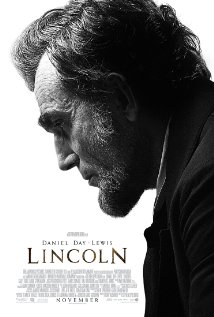
We’ve had two history lessons this week—Ken Burns’ four-hour PBS examination of the Dust Bowl decade and the recently released Lincoln, with Daniel Day-Lewis not just portraying Abraham Lincoln but actually becoming him.
 First, the Dust Bowl. I was a young lad in South Dakota throughout most of the 30’s, and I vaguely recall how hot and dry the summers were, how the dirt would whistle down the unpaved streets in winds that never seemed to end. But I don’t remember anything as horrible as the drought and dust storms that went on and on in Texas,, New Mexico, the Oklahoma panhandle, southeastern Colorado, and southwestern Kansas.
  The mountainous clouds of dirt and dust and sand that billowed up and over those regions must have been horrible, making the air nearly impossible to breathe, darkening the days to a black that was blacker than any eclipse could cause. The years of drought, of failing crops, of dropping prices for those smaller and smaller crops must have been awful. Nature and poor farming practices were to blame for the conditions, with greedy farmers and corporate farms plowing under the sea of native buffalo grass that had for centuries held the soil in place, held the moisture in the ground until drought conditions passed. Yet many of those people, according to Burns’s story, held on and on to what little they had left. Until finally, many of them made their way west to what they considered the land of milk and honey, California, only to discover their mistreatment there was nearly as bad as what the drought and dust storms had done to them back home. They were products of the Great Depression, all labeled “Okies” even though many of them were from places other than Oklahoma, most of them looked down upon as tramps and paupers and given jobs in the California fields for paupers’ wages. I learned that although Steinbeck’s The Grapes of Wrath won all the popular acclaim for dramatizing this era in our history, a woman named Sonora Babb had written a similar novel just ahead of Steinbeck, a novel that took 67 years to find publication—Whose Names Are Unknown. I think I may need to find this novel and read it, see if, in fact, Steinbeck didn’t steal this idea from someone who lived it instead of someone who only investigated it and then wrote about it, winning a fame that might have more rightly belonged to Sonora Babb.
 Then there’s the story of Lincoln’s efforts to get the 13th Amendment passed at a time when the Civil War was nearly ended and the certainty that the amendment wouldn’t pass if the southern states, reinstated into the Union after the war, were allowed to vote on its passage. Interesting. Enlightening. I never knew about the chicanery he had to resort to for the needed twenty yes votes in the House of Representatives, the legal and not so legal bribes to congressmen to win their votes. I didn’t realize that Mary Todd Lincoln suffered from severe headaches, that she was considered by many to be mad. I didn’t fully realize how much he was loathed by those who opposed his efforts to emancipate the blacks, or how much he was loved by those who sided with him, admired him for what he had done to save our nation and make slavery illegal. Stephen Spielberg’s film is long, dark, filled with dialogue and essentially actionless, yet very important in making statements that reflect on our past as well as our present. Daniel Day-Lewis has a very good shot at winning another Oscar for best actor. Tommy Lee Jones, as Congressman Thaddeus Stevens, despite his growing ugliness as a person but not as an actor, may also win for best supporting role. Go see it, if not for the acting, for the history lesson we could all use.


Sunday, November 18
Thanksgiving 2012

Friday, November 16
The Perks of Being a Wallflower

Thursday, November 15
Skyfall & Pickles

Here's some more cat truth from Pickles:

Monday, November 12
Starlings
We have a starling that sits on our eastern neighbor’s antennae every evening just before sundown, cooing and gurgling as only happy starlings can do. He or she seems so overjoyed to see another day end with no calamities, sort of like me in my November days. Starlings are such funny little creatures, ugly yet beautiful, awkward little bodies, short tails, sharp little yellow beaks. But oh how they can coo and gurgle and chirp. I remember our little starling family back in New York, living in a hole in our garage roof. Living there whenever they could take occupancy ahead of the squirrel that also wanted to call it home. Every spring, they’d return to clean it out before having their little starling babies. The female would sit in a nearby pine and simply sing her heart out before laying the eggs and then sitting on them until the little gluttons appeared. Then she and her husband would spend all day going back and forth catching bugs and worms to give to the tiny heads sticking out from the hole. And then, one day in late spring, they would all be gone, the parents off to wherever starlings went after the child rearing was over, the children off to raise their own families. We never saw them leave. Maybe they made their exits in the dead of night. Maybe the squirrel finally shooed them away. Or maybe they all joined the others in their amazing starling flights when thousand of them would all get together to perform for groundlings. If you’ve ever seen this amazing sight, you know what I mean by a performance—thousand of starlings cascading back and forth, in intricate sheets of flight, like smoke billowing and swerving and twirling. Better than talking about it, why not just look at it in this video on YouTube.
Sunday, November 11
Hugs & Cloud Atlas
Hugging is therapeutic. I don’t mean the kind where two people bend at the waist and pat each other on the shoulder. I mean full body hugging. More therapeutic than a kiss, especially the kiss on the cheek or forehead. Most men don’t feel comfortable hugging another man, but I do. The hug is comforting, saying by the act how sorry we are at the bad news the other has just received. Or how much the hugger loves the huggee. The world would be a much better place if we all gave each other a hug occasionally, or better yet, a hug often. So, dear reader, please assume that I just gave you an internet hug. There, don’t you feel better?
 I went to see Cloud Atlas yesterday and was very impressed . . . and very confused. Almost three hours of Cloud Atlas. And I left the theater after nearly three hours just as confused as I was at the beginning. I felt like I’d just seen six separate stories all glued together in bits and pieces. The film tells us that everyone is connected in time and space. The Korean clone Sonmi-451 (Doona Bae), when her interrogator asks her if she is afraid of death, explains that death is just a door. When the door shuts, another door opens, and we move through time as though through the chambers in a nautilus, back and forth from one chamber to another, all connected. The six main characters and their stories overlap as their lives play out, with each of them assuming different roles in different times. Tom Hanks, Halle Berry, Jim Broadbent, Susan Sarandon, Hugh Grant, and Doona Bae all play up to six different but related characters spanning times from 1849 to 2346 and a postapocalyptic primitive society (Hanks as a nervous goatherder) and visitors from a distant planet (Berry as emissary). It’s sort of fun guessing which actor is playing which character. The critics are all over the map in their assessments of this movie, either hating it or loving it, very few taking the middle ground. New Yorker movie critic Richard Brody called it “synchronized banality.” Roger Ebert thought it was so good he saw it twice and was looking forward to seeing it a third time. He says, “But, oh, what a film this is! And what a demonstration of the magical, dreamlike qualities of the cinema. And what an opportunity for the actors. And what a leap by the directors, who free themselves from the chains of narrative continuity.” I guess I’ll go along with Roger and see it again, and maybe even again. Maybe I won’t be so confused after the third time.

Saturday, November 10
Book Sale

Wednesday, November 7
Oklahoma & Obama

Speaking of which, at last it’s over and President Barack Obama can now get back to attempting to pull us out of the financial hole we’re in. He won’t be able to do it in his final four years, but if we exhibit patience, he’ll get us started on the road to recovery. And Obamacare is here to stay, causing needless heartache in all the conservative Republicans who keep telling us it will drive us to rack and ruin instead of national health. If it does what it’s set out to do—bring down ridiculous hospital, doctor, and pharmaceutical costs, allow medical help to all—it will be well worth it. All right, folks, just sit back and watch the value of the dollar go up, unemployment go down, the reputation of the U.S. as a world leader go up, heinous acts of terrorism go down . . . and down. We won’t achieve peace throughout the world in my lifetime, but it looks possible somewhere down the road.

Tuesday, November 6
Flight & Elections

I remember Ray Milland on his Lost Weekend binge. I remember Frank Sinatra as the Man with the Golden Arm. And I will always remember Denzel Washington, the drunken coke shooter, as he fled from himself in Flight. What an amazing performance. I think tour de force applies here. Although it’s not a one-man show—John Goodman plays the cocaine supplier for Whip Whitaker (Denzel Washington) and plays him very well, Kelly Reilly plays the addict Whip meets in the hospital and later brings to his farm to live with him, and Don Cheadle plays the lawyer who defends Whip, even though he doesn’t much care for Whip and his addictions—it may as well be. Washington brings it all to this role and his audience is fascinated to watch him create this cocky, arrogant, deceitful alcoholic airline pilot who manages to save most of his passengers when the plane he’s flying goes into a dive. This scene, the flight and subsequent crash landing, takes place early in the movie. But it’s easily the most realistic and frightening plane crash ever filmed. The rest of the movie shows us Whip, the bad alcoholic as well as the good person he might be. If alcoholism is both genetic as well as environmental, we see it in the apparently recently dead father who not only taught Whip how to fly but also how to drink. We never get to see exactly how Whip became what he is, now middle-aged and divorced from a wife who could no longer take his drinking, estranged from a son who hates him for what Whip has done to his mother. Yes, tour de force is appropriate. And I’d be very surprised if he isn’t nominated for best actor, surprised again if he doesn’t win it.


Saturday, November 3
House & Electoral College
Another step in the process, straightening out the mess in the garage. Had to put into kitty litter containers all the books by authors I wanted to keep. Had to put away all the extra golf clubs. Had to sweep and sweep and sweep. Finally, it looks like a garage again. I don’t know what else I’ll have to do to finish this putting-my-house-in-order. It seems like it’s now pretty orderly. Maybe in another three or four years I’ll feel obligated to get rid of more stuff. Amazing how we all spend our entire lives accumulating stuff, only to try to get rid of it as we get old. And, oh my, does my back ever tell me I’m old.

Wednesday, October 31
Halloween & Orderly House

Halloween, 2012. Good riddance. And in six days, the election of one or the other. And then, good riddance to the election and the negative campaign ads. I no longer care which one wins, but I’m still guessing that Barack Obama will be serving another four years. I hope those four years are better than the last four. We’ll see.

And what have I been doing this past week? Rearranging my back room where I have my computer. I carted away all the books I no longer wanted, took out one of the tall bookcases I was using as a wall to hide my workplace, unhooked all the stuff I have attached to my computer and removed the hardware so I could pull out my cumbersome desk, took the desk apart and hauled its remains to the garage, spent a painful four hours putting together a new desk, much smaller than the old, moved all my books out to the edge of my driveway and stacked them onto tables for the drive-by public to see and respond to a FREE BOOKS sign. I left the books out there for three days and got rid of about a third of them. Then I called Benevilla, a senior help center that was having a book sale, and offered them my leftovers. They came and took away all of them, some three or four hundred books. Good riddance. Now I have a back room that actually looks like a room again. And I’m body-weary from all the unaccustomed labor. But I’m mentally happy with the change. Just another step in the process of putting my life in order, simplifying my life. Henry David Thoreau would be proud of me.

Monday, October 29
Ed McBain's Widows
I know some of my readers must get bored whenever I talk about a writer’s style, but the old teacher in me just can’t resist. What follows is a long segment from Ed McBain’s (rest his soul) Widows, a very good episode in the 87th Precinct series.
Gloria Sanders was covered with blood.
This was ten o’clock on the morning of July twenty-fifth in the nurses’ lounge at Farley General Hospital, down on Meriden Street. Her white uniform was covered with blood, and there were also flecks of blood in her blonde hair and on her face. They’d had a severe bleeder in the Emergency Room not ten minutes earlier, and Gloria had been part of the team of nurses who, working with the resident, had tried to stanch the flow of blood. There’d been blood all over the table, bed, blood on the walls, blood everywhere, she had never seen anyone spurting so much blood in her life.
“A stabbing victim,” she told Carella and Brown. “He came in with a patch over the wound. The minute we peeled it off, he began gushing.”
She was dying for a cigarette now, she told them, but smoking was against hospital rules, even though the people who made the rule had never worked in an emergency room or seen a gusher like the one they’d had this morning. Or the kid yesterday, who’d fallen under a subway car and had both his legs severed just above the knee. A miracle either of them was still alive. And they would let her smoke a goddamn cigarette.
Arthur Schumacher’s taste for blue-eyed blondes seemed to go back a long way. His former wife’s eyes were the color of cobalt, her hair an extravagant yellow that blatantly advertised its origins in a bottle. Slender and some five feet six or seven inches tall, Gloria strongly resembled the one daughter they’d already met, but there was a harder edge to her. She’d been around a while, her face said, her body said, her entire stance said. Life had done worse things to her than being bled on by a stabbing victim, her eyes said.
“So what can I do for you?” she asked, and the words sounded confrontational and openly challenging. I’ve seen it all and done it all, so watch out boys. I’d as soon kick you in the groin as look at you. Blue eyes studying them warily. Blonde hair bright as brass, clipped short and neat around her head, give her a stern forbidding look. This was not the honey-blonde hair her daughter Lois had; if this woman were approaching you at night, you’d see her a block away. She reminded Carella of burned-out prison matrons he had known. So what can I do for you?
I wish I’d written that.
Note the effect of the first lone sentence to start the chapter.
Note the structure and punctuation of “There’d been blood all over the table, bed, blood on the walls, blood everywhere, she had never seen anyone spurting so much blood in her life.”(the movement from table to bed, then repeating “blood” to introduce the next two phrases; the use of a comma to hook the next sentence in instead of a semicolon or a period)
Note the author movement to interior omniscient in the paragraph beginning “She was dying for a cigarette . . .” (not using quotation marks for what she told them, the way he makes it sound like what she would be saying to herself even though he keeps it in the 3rd person) Note also the two fragments written as sentences (they’re both noun clusters)
Note the use of “blonde” as an organizing device (blood in her blonde hair, blue-eyed blondes, then a description of it as “blatantly from a bottle, blonde hair bright as brass, not the honey-blonde of her daughter,” then the image of her hair like a beacon in the night)
Note the cadence of “She'd been around a while, her face said, her body said, her entire stance said. Life had done worse things to her than being bled on by a stabbing victim, her eyes said.” (the position and repeating of “face said,” “body said,” stance said,” and then the clever echo of it in the next sentence, “her eyes said”)
Note the opening and closing of the final paragraph (the first question actually spoken and in quote marks, the final question only Carella’s mental repeating of it to illustrate the sound of her challenge)
Note the way he uses suppositional dialogue to get at the character of Gloria—her question in the last paragraph suggests that she might have said to them, “I’ve seen it all and done it all, so watch out, boys. I’d as soon . . .”
I hope I haven’t bored any readers. But this is a very instructive passage, and oh so very well said. McBain (Evan Hunter) may have started out as a writer of pulp fiction in the early books in the 87th Precinct series, but about a third of the way through he began writing much more carefully constructed stories. If you tackle the series, you’ll see what I mean.
Friday, October 26
600 & Argo
This is my 600th post. That’s a lot of words spilled out on this bloggy desert, most of which were sucked down into the sand without leaving a mark. I should be used to that, having five novels also sinking without a ripple. Poor me. But if I weren’t writing, I’d be dead. So I guess I’ll keep on plugging away, sending out misguided missiles, hoping to find a target every now and then.
Quick comment about Ben Affleck’s Argo. Amazing how the tension built throughout, even though the audience knew the outcome from the very beginning. A very good movie despite the fact that the story may have fudged on the amount of U.S. involvement and downplayed the amount of Canadian involvement in the exfiltration of the six Americans from a manic Iran. It was also a frightening portrayal of the horror of the mob beast that stormed the embassy. Good movie, although maybe not as good as the reviewers made it out to be. I’d be surprised if it won any Oscars. It did, however, give us a likely catchphrase for the next year or two—“Argofuckyourself!”
A side note about bumper humping. BC has the final say. And, yes, it’s a bit unpleasant.

Thursday, October 25
Lizz Wright & Political Ads
I’ve been trying to come up with a list of ballads by female jazz singers to put on an mp3 cd for those long car drives. I especially like the slow ones with interesting lyrics and blue overtones and there are plenty of those among my 12,000 tracks. My starting points were Karrin Allyson and Jackie Allen, maybe my two favorite singers after Barbra. Or maybe even before Barbra. Hard to say since they all have such different vocal styles and qualities. Then I went to a singer I haven’t listened to in a long time, Lizz Wright, a young black woman with a sexy alto voice. It didn’t take long to find at least a dozen that fit the bill for slow and bluesy—“Dreaming Wide Awake,” “Soon As I Get Home” (from The Wiz), “Vocalise/End of the Line,” and “Blue Rose.” I went to YouTube and picked out two that would go nicely in this blog, something for my occasional reader to listen to while perusing this post. I hope you like them.

Wednesday, October 24
Putting My Bookhouse in Order
In my battle with books, putting my bookhouse in order, I’ve been separating books to give away and books to keep. The giveaways win by five to one. I can’t believe the books I’ve accumulated with the idea that someday I’d get around to reading them all. I’m guessing that I’ve read about half of what I have, and a good many deserve a second reading. Well, I’ve now decided I don’t have enough time for them all. And I keep buying more books by people I just can’t not read—Lee Child, Robert Crais, Lawrence Block, James Lee Burke, Michael Connelly, to name the most prominent. And what about all the dead guys I admire? I’ve read all the 47th Precinct series and the Matthew Hope series by Ed McBain each twice, all the Spenser series By Robert Parker twice, and all the Travis McGee series by John D. MacDonald thrice. And most of my other favorites are getting long in the tooth and may soon depart, like Block and Burke and Leonard and Deaver.

In my unshelving of books and my fondling them and making the hard decisions about which to keep and which to throw to the wolves, I came upon one of the Jack Reachers by Lee Child, Running Blind. It’s the fourth in the series and I know I’ve read it because I’ve read them all. I just happened to glance inside and read the first page or two . . . or three, and I couldn’t remember it. See, I must be getting closer and closer to that two-book library when I just keep reading the two over and over, not quite remembering what I’d previously read. So, naturally, I read beyond the first three pages and kept right on going. By the time I got through about a third of it, I remembered things from my first reading. But not enough to keep me from reading it again. Man, It’s a good one. But back to the sorting out. I’ve now identified the ones I want to keep. Now comes the task of taking the giveaways out to the garage to join all their kin from last year’s abortive garage sale. Then I need to make signs to put out on the corners of our street—FREE BOOKS AND CD’S!!! COME AND TAKE AS MANY AS YOU WANT! PLASTIC BAGS ARE ON THE HOOK. ENJOY! Then set up tables to hold part of the bounty. Then cart out as many as the tables will hold. Then sit back and hope they all disappear. Then put out another batch the next day and the next and the next until the garage is empty of books and cd’s. Oh, happy day! Oh, sad day.
Sunday, October 21
John Sandford & Michael Connelly
John Sandford, in his Prey and Virgil Flowers series, isn’t known as a descriptive writer. He’s known more for his homeboy dialogue, which is often hilarious, often Minnesota coarse. Here’s an example of a rare bit of lyricism, and an image any Minnesota or South Dakota lad can appreciate. “In a cold dry spring, before the trees bud out, the morning sun seems to shine white like a silver dime on the horizon, and the clear air over the still fallow ground gives the prairie a particular bleakness, if your mood is already bleak.”
Another writer I admire is Michael Connelly. In The Narrows he has an aging Harry Bosch thinking about the world’s ugliness that he’s experienced and his need to protect his daughter from that ugliness. He says, “You can become unhinged and cut loose from the world. You can believe you are a permanent outsider. But the innocence of a child will bring you back and give you the shield of joy with which to protect yourself. I have learned this late in life but not too late. It’s never too late. It hurt me to think about the things she would learn about the world. All I knew was that I didn’t want to teach her anything. I felt tainted by the paths I had taken in my life and the things I knew. I had nothing from it I wanted her to have. I just wanted her to teach me.
So I told her, yes, the Burger King and the Dairy Queen were happy and that they had a wonderful life together. I wanted her to have her stories and her fairy tales while she could still believe them. For soon enough, I knew, they would be taken away.” Isn’t that sadly but exquisitely said?
Saturday, October 20
Humping & End of Watch
I discovered another way for the bumper humper to gain a car length. When he comes to a red light and he’s in the right lane, he makes a quick right followed by a quick Uie and another quick right on the green. Yupp, he gains ten, twenty seconds, and who knows how many points in his roady video game. Oh, how I long for a cop car to see him do it. Oh, how I long for the cop to hold him there for twenty, thirty minutes. I wonder how many points he’d lose for that delay.

I saw End of Watch today and counted 583 f-bombs in the first hour. After that I lost count, but I’m assuming it must have gone over a thousand by film’s end. But—you know what?—it sounded entirely reasonable in light of the setting in really tough “gangsta” L.A. Officer Brian Taylor (Jake Gyllenhaal) and Officer Mike Zavala (Michael Pena) cruise South Central L.A., looking for crimes and bad guys and finding both in unlikely abundance—child abuse, house fire, a coyote house filled with thirty or forty illegals imprisoned in filth, drug cartel and gangbanger shootouts. And nearly the entire film is shown by hand-held camera or tiny lapel cameras (Taylor is making a film of their daily activities for a filmmaking class he’s taking), by dashboard cams, or by other hand-held cameras or cell phones of onlookers to various crimes. It makes a frenetic movement that approximates the high-speed violence of the cops and bangers. The film is all about the dangers the boys in blue face on a daily basis. But more important, it’s about the blue brotherhood of the entire force, especially the bond between Taylor and Zavala. They’re brothers, even more than brothers. If they were gay they’d be lovers. But they’re both married, Taylor to Janet (Anna Kendrick), Mike to his childhood sweetheart Gabby (Natalie Martinez), and married forever it seems. At Brian and Janet’s wedding reception, the two do a really clever dance expressing their feelings for each other. Mike tells Brian that when he asked his grandmother if he should marry Gabby, she told him: “If you can live without her, then man-up and cut her off. Don't string her along.” That’s what the relationship between the two officers is all about, nearly an inability to live without the other. Great movie. Great acting. Go see it.
Tuesday, October 16
Taken 2 & Bumper Humping

Liam Neeson, in Taken 2, kicks some serious ass. And the man does his own stunts. And the man is sixty. I think Neeson would have been a better choice to play Jack Reacher in the upcoming film called Reacher than Tom Cruise. Neeson is tall and built like a block, just like Reacher. David Morse might also have been a better Reacher than Cruise—tall, broad, and tough as nails. I guess I’ll just have to wait to see what Tom Cruise does with the role. But back to Taken 2. I asked Rosalie to refuse to let me ever go to Istanbul for whatever reason. Just not a place I’d want to visit, with narrow nasty streets and nastiness all around. In the movie, the Libyans that Neeson had killed in Taken, were being buried, and the father of the tribe decided that he had to have revenge against the man who had killed his favorite son. Never mind that the son had kidnapped Neeson’s daughter to sell her into white slavery. Never mind that the family is a group of real baddies. So Neeson is in Turkey on government business (I’m still not sure what kind of badass business he’s in) and his ex-wife and daughter show up for a brief vacation with him. And the Libyans show up en mass to capture the three of them. That’s the movie. The whole thing involves Neeson’s attempts to rescue his wife and daughter, meanwhile killing several dozen bad guys. A very forgettable movie, but a nice way to spend an empty afternoon. And, naturally, they set it up for a Taken 3. I can’t imagine who will be taken in that one, but I’m sure Neeson will be there to kick ass and take no prisoners.
On my way home from a dental visit this morning, a little green car rode my bumper for a quarter-mile or so, then squirted out to pass me and catch up with the next car, riding his bumper also. It seems that too many young drivers are really playing a roady video game, seeing how many cars they can pass to gain a temporary one-car advantage, zipping in and out and back and forth from lane to lane, always cutting dangerously in front of cars on both in and out, always tailgating the car in front. I like to think of it as bumper humping, or autofanny kissing, or, more specifically, Fido fucking. I always wish a motor patrol would spot him/her and fine his/her ass a bunch. But they never seem to be around.
Thursday, October 11
The Black Widow

I wrote The Black Widow intending it to be the final episode in the Travis McGee series by John D. MacDonald, but the MacDonald family said no. So I switched it to a private detective in Phoenix. But the two characters, Travis McGee and Colt Frazier, are essentially the same character with the same beliefs. Now that Curiosity, the Mars rover, seems to have found evidence of water on that planet, this conversation between Sarah and Travis seems fitting. While they are waiting for a phone call, Sarah pumps him about his religious beliefs:
"I’ve already told you," Sarah says, "I was raised a Baptist, but I haven’t been to church on a regular basis for a very long time. Max wasn’t willing to go with me, so I just quit going. How about you? What are your religious beliefs? What church were you raised in?"
I just looked at her, slowly shaking my head, a very small smile to lighten what might have been construed as a negative reaction. "My mother and father were both Catholic, but never very strict Catholics, and I was never raised with a lot of religious imperative or instruction. And after I left home, I became very much a lapsed Catholic. I could never understand the need for some intermediary between me and God, whatever sort of God there may be. Or even if there is a God. I’m not an atheist, but certainly an agnostic. I just don’t know if there is or isn’t a God. And certainly, if there is, he or she or it isn’t some deity in human form. That just doesn’t make any sense to me. Science tells us about the immensity of the universe, of the numbers of stars and star systems, too many to comprehend. How can we believe that we’re the only intelligence in this immensity? And how can we think some creator or creative force is looking down on us benevolently, waiting for us to grow up and come to our senses? I believe in the principles Christ taught, and in my own way I follow them to the letter. But I don’t need a church to govern me into following those principles."
She was watching me intently as I said all this, her mouth moving side to side as she concentrated on my words, her head sometimes nodding a bit, sometimes moving side to side. "So, you’re a Christian . . . sort of. And you’re not sure about the existence of God or, if one does exist, what form this creator might take. Is that it?"
I nodded.
"And you’re saying the inhabitants of this planet may not be the only intelligence in the universe?"
I nodded.
"I agree with that for the most part. But what makes you think we’re not alone? Are you thinking we may have some aliens, some green critters, one day come to call?"
I laughed. "Green critters, indeed. You’ve been brainwashed by too many bad science fiction flicks. I’m a realist and because science has convinced me that we, and our earthly home, are an infinitesimally tiny speck in the total scheme of things, I have to believe that somewhere out there, there must be a nearly limitless number of potential planets that sustain life that would develop on an evolutionary track similar to ours."
"Similar to ours? You mean that these potential planets would have intelligent beings like us? Not giant bugs or slimy slugs or . . . apes?" She was leaning forward, hands on knees. She wasn’t challenging what I was saying, just intent on understanding what I meant.
"Okay, I don’t mean that other forms couldn’t become the dominant species on one of these planets. But it seems logical to me that life can only begin on a planet with just the right conditions, like just the right temperatures and with the existence of water. Look at our own system and the planets we have. Earth seems to be the only one with these necessary conditions. No form of life could exist on Mercury, let’s say, or Venus from what the scientists tell us about conditions there. And most unlikely on any of those further out except Mars. I don’t think most people realize the philosophical implications of our discovering water on Mars. If it’s true, and that’s what they’re now saying, these scientists involved in the Mars missions, then they could also discover some form of microscopic life on Mars. That tells me that in the vastness of our universe, there would be many many solar systems with circling planets, some of which would have conditions similar to ours. And, therefore, not only the potential for life, the probability of life."
Wednesday, October 10
Odds and Ends

Barbra has the best voice of anyone in this and the last century. Nobody even close. Frank was a better stylist but he didn’t have the vocal quality she has.
What a humbling experience it is to put words down on paper, words you’ve labored over, sighed over, pored over, sweat upon, wept upon, cursed, blessed, kissed. And when the child is finally born, the labors over, you think he’s so handsome. And onlookers turn away, with a look of disgust or sympathy, or a veiled smile, maybe a little chuckle behind masking fingers.
The unfed mind devours itself. Gore Vidal
I’ve decided that what I do almost daily isn’t computering—it’s computtering
Another quote from Heinlein’s Stranger in a Strange Land, this time about English complexity and its influence on the other languages of the world.
“English is the largest of the human tongues, with several times the vocabulary of the second largest language—this alone made it inevitable that English would eventually become, as it did, the lingua franca of this planet, for it is thereby the richest and the most flexible—despite its barbaric accretions . . . or, I should say, because of its barbaric accretions. English swallows up anything that comes its way, makes English out of it. Nobody tried to stop this process, the way some languages are policed and have official limits. . . . English was in truth a bastard tongue and nobody cared how it grew . . . and it did!—enormously. Until no one could hope to be an educated man unless he did his best to embrace this monster.”
Tuesday, October 9
Fat Folks & Aging
Fox last season was hyping a new reality show for the fall, a thing called "More to Love." Yikes! How could they do it? And how could they describe the twenty ladies vying for the love of the stout young gentleman as average or normal regarding their weight and body types, saying sizes 14-16 are average? Yikes, again. From what I saw of them, "zaftig" and "pleasingly plump" would be too kind. How about chubby, pudgy, rotund, paunchy, lumpish, corpulent, fleshy, beefy, obese . . . or just plain fat? Why would anybody tune in to this awful idea for a show? And, apparently, no one did, because it was axed almost immediately.
I'm seventy-eight years old, soon to be 79, and figure I probably have ten more years to go. That's 120 months. If each month were a dollar, I'd have $120 in my mental piggy bank. And October is about to cost me a buck. So far it's seemed more like two-bits. Inflation, I guess. I could stretch it out to twenty years if I behaved myself, lost thirty pounds, went on that exercise program I keep talking about, give up ice cream and booze. But the quality of my life would go down dramatically. I think I'll spend a few pennies thinking about it . . .. I just did, thought about it, and I decided against it. Okay, then, 119 months left. Spend them wisely, fool.
Monday, October 8
Putting My House in Order

The death of my 95-year-young sister-in-law Bonnie Scott and all the details her two sisters Rosalie and Kaye had to go through to send Bonnie safely on her way made me think about my need to put my house in order. I don’t want my wife or children to have to go through what Rosalie and Kaye had to go through with Bonnie.
The first thing is to get rid of all the “stuff” I no longer need, like my many books and cd’s, like all the clothes I’ll never again wear either because it’s out of fashion or it seems to have shrunk over the years, like all the “stuff” I’ve saved on my computer. I’ve already donated a bunch of cd’s to the 4-Paws Animal Rescue. And the books I have on my shelves and all the series of novels by my favorite authors stored in the garage can all go. Instead of trying to sell them, I think I’ll put an ad in the local paper that I have FREE books and cd’s to give away. Knowing the folks in Sun City West and knowing how they’ll show up for anything that’s free, I should be able to get rid of everything. Then they can someday put their own houses in order. Maybe by then I’ll have forgotten my books and will go to their free book giveaway and pick up a few I’ll no longer recognize. As for all the gunk in my computer, I’ll just have to open files to see what’s there and then delete what I no longer need. For the last twenty years I’ve saved all the letters sent and received by relatives and friends. Why? Was I planning one day to go back and read them all? Nearly every joke I’ve gotten on the internet is saved somewhere on my hard drive. Why? Was I planning to go back whenever I needed a laugh?I guess I was saving them in case I ever wanted to send one along with a letter. It’s a very disorderly house, my computer.
The next thing I need to do is to list all the things we want to give to our children and which to whom. And when I think about it, there isn’t that much to list. Most of our belongings don’t have any personal value or familial meaning. I wandered around our house and made my list—jewelry, crystal, paintings by my mother and Rosalie’s father, a few expensive knickknacks, some collectible sets, some small furniture handed down from past generations, and a beautifully carved pheasant given to me when I retired. That’s it. Now we just have to stop buying any more “stuff.”
Thursday, October 4
Science Fiction
I’m re-reading an old favorite of mine from my youth when I was a science fiction fan—more than a fan, a compulsive devourer of the genre—Robert Heinlein’s Stranger in a Strange Land. It’s typical Heinlein with his oh so stilted style, but it also shows what a futurist he was. The stranger in the title, Valentine Michael Smith, the Man from Mars, is an example of what we could be, may even become in the distant future. And though it would need considerable updating and revising, Stranger would make a great film. One quick quote that seems too relevant today: "There was one field in which man was unsurpassed; he showed unlimited ingenuity in devising bigger and more efficient ways to kill off, enslave, harass, and in all ways make an unbearable nuisance of himself to himself. Man was his own grimmest joke on himself."
Heinlein’s book took me back to that time when I first discovered science fiction, sometime in the mid-Forties when the pulp magazines were in full bloom. I found Edgar Rice Burroughs, probably more famous for the Tarzan series than his science fiction. I devoured them all—the Tarzans, Pellucidar and At the Earth’s Core, all the Mars and Venus series, all the oddball stuff. And then I devoured them again. I was never tuned into the early sci-fi greats, H. G. Wells and Jules Verne, but I soon learned about the others, both early and late: Isaac Asimov and the Foundation series and I, Robot; Theodore Sturgeon and More Than Human; all of Heinlein’s extrapolations into the future, especially The Door into Summer. I read Ray Bradbury, but he was almost more into horror and fantasy than science fiction with Fahrenheit 451, The Martian Chronicles, Something Wicked This Way Comes, and The Illustrated Man, and the two stories that stand out in my memory, “There Will Come Soft Rains” about the end of man after a nuclear holocaust, with a self-sustaining house slowly running down, and the truly spooky “The Emissary.” And along with all the not so great sci-fi, I read the really good stuff: A Canticle for Liebowitz by Walter M. Miller, the Dune trilogy by Frank Herbert, Stand on Zanzibar by John Brunner, A Clockwork Orange by Anthony Burgess, and 2001, A Space Odyssey by Arthur C. Clarke.
But science fiction sort of wandered off into fantasy in the Seventies and I got bored with it. Critics even began calling it speculative fiction, apparently arguing that much of what was written wasn’t based on science so much as pure speculation about what the future might hold for man. “Spec-fi” just doesn’t sound as good to me as “sci-fi.” Lots of dystopian novels warning us of the future (Orwell’s 1984 and Huxley’s Brave New World probably the best examples) and a thin sprinkling of utopian views envisioning a positive future (especially Arthur C. Clarke’s Childhood’s End). It seems that science fiction is still alive and well, if not in novels and stories, then certainly in film and television. I think of The Hunger Games, the just-released Looper and the up-coming Cloud Atlas, all the Mad Max movies that gave us Mel Gibson whether we wanted him or not. I think of all the tv shows based on science fiction: the comedies like “My Favorite Martian,” “Mork and Mindy,” “3rd Rock from the Sun.” and “Alf”; the very successful “Lost” and the not so successful “Terra Nova,” the still-to-be-determined-if-successful-or-not-so, "Revolution." It seems that sci-fi- or spec-fi is alive and well and will probably continue to be for a long time to come. Anyone looking for a good book and a good change from whatever they’re now reading might do well to turn to one of the sci-fi novels mentioned above.
Wednesday, October 3
This 'n' That
Finally, the debates are here. This should be an interesting dogfight, and I’m thinking it may be between a pit bull and a chihuahua. You figure out which is which.
In Ian McEwan’s novel Enduring Love, the narrator is talking about his wife Clarissa: “I couldn’t move my eyes from her lips. So supple, so glossily rich in natural color. Lipstick was invented so that women could enjoy a poor version of lips like these.” What a charming compliment to the woman he loved.
I just listened to Jackie Allen sing an old Rogers and Hart song, “You’re Nearer,” and couldn’t help but notice how simple, yet how lovely, the lyrics were.
You’re nearer, than my head is to my pillow,
Nearer, than the wind is to the willow.
Dearer, than the rain is to the earth below,
Precious as the sun to the things that grow.
You’re nearer, than the ivy to the wall is,
Nearer, than the winter to the fall is.
Leave me, but when you’re away, you’ll know,
You’re nearer, for I love you so!
I may be old-fashioned, but I still most admire lyrics I can hear and understand, lyrics carefully constructed and balanced, unlike too many song lyrics being written today. Even Taylor Swift, a singer/writer I admire, writes lyrics that don’t have real balance. “White Horse,” for example, is a great song, but it depends for the most part on her singing it, her delivery, her personality. Then there’s the insanely popular Justin Bieber. I think he could sing the yellow pages and his female fans would go berserk. But the lyrics themselves are certainly not up to any of Larry Hart’s. He begins “One Time” with “Me plus you, I’ma tell you one time, / Me plus you, I’ma tell you one time, / Me plus you, I’ma tell you one time, / One time one time.” Catchy, right? And he goes on with “When I met you girl my heart went knock knock, / Now them butterflies in my stomach won’t stop stop. / And even though it’s a struggle love is all we got / And we gon’ keep keep climbing to the mountain top.” All right, so I’m picking on the Beebs and his lyrics. He seems to be a fine young man with a great future in the music industry, but I’ma tell you one time, one time, he ain’t no Larry Hart.
Monday, October 1
Sunday Sports
After Sunday sports I’m exhausted. I watched the entire U.S meltdown in the Ryder Cup, and I’m exhausted. I watched the entire overtime victory of the Cardinals over the Dolphins, and I’m exhausted. I feel like I need to go to bed and sleep for a week. The Americans simply let the Ryder Cup be snatched away from them, especially in the final three matches when no one on the U.S. team could seem to make a putt. The most egregious error was when Steve Stricker couldn’t get up and down on seventeen. He just couldn’t lose that hole. But he did. And then he could only tie Martin Kaymer on the eighteenth to lose his match one up. Unforgiveable for one of the best putters on the U.S. team to choke it on that seventeenth hole. He will live forever in replay hell, like Bernhard Langer in the 1991 Cup. If he had gotten that crucial half point, then Tiger needed only to tie Molinari on the final hole to win the Cup. But by the time Tiger and Molinari got to their second shots on eighteen, the results were already in. The win or loss was a matter of inches. Just wait’ll 2014.
Subscribe to:
Posts (Atom)